Milking a Two-Bucket Cow
by Linda Egenes

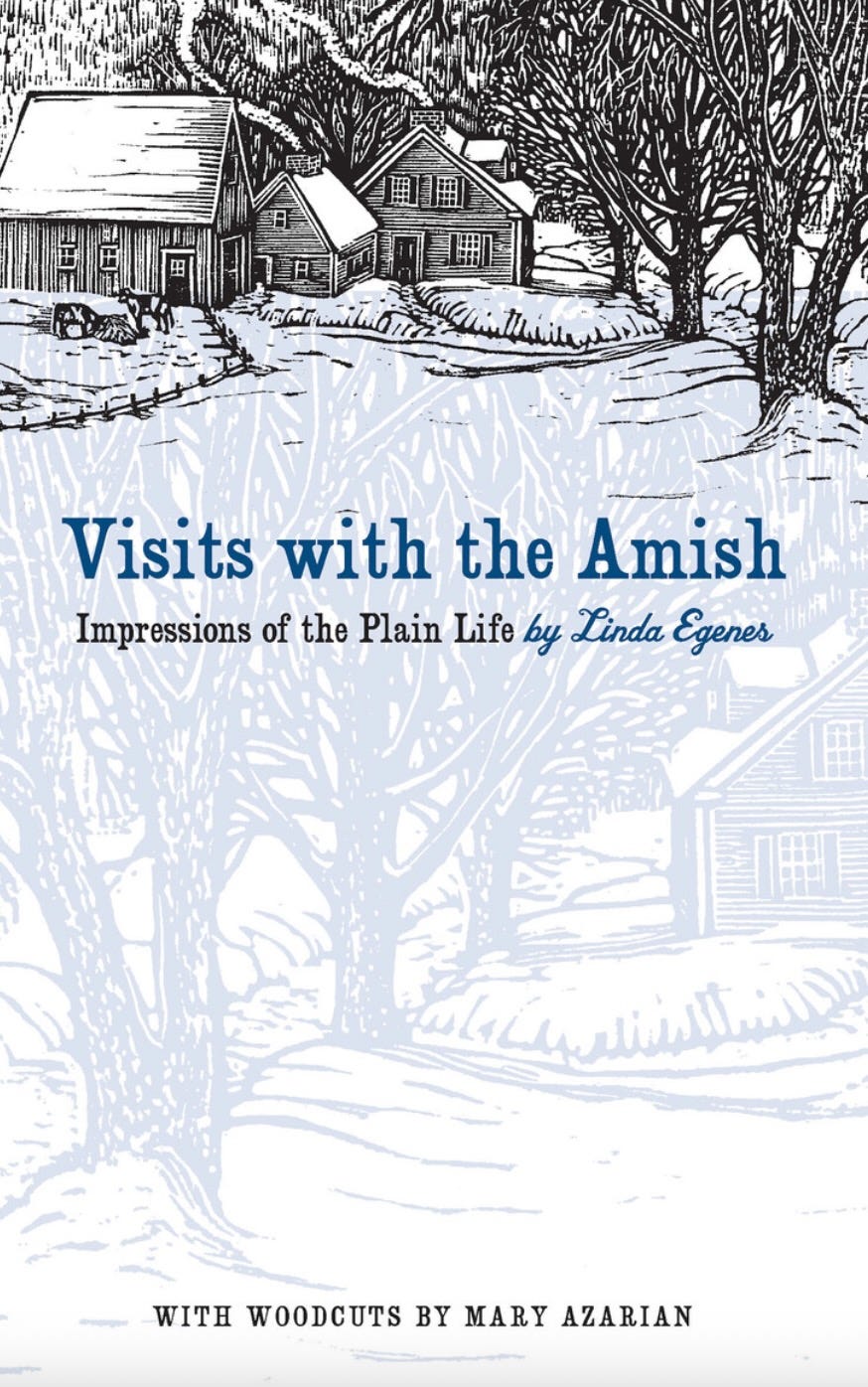
The Amish love to farm. “I think I wouldn’t want to be living if I weren’t on a farm,” an Amish teenager once told me. “It’s exciting—there’s always something happening.”
Farming is also a way to keep the family together. When the father and mother work at home, they can take an active role in raising the children, training them in the Amish way of life.
The Amish believe that farmers live closest to God. “On a farm, you can see that God is in all things that are alive and growing,” explains Leah Peachy, an Amish woman I met in North Carolina.
They also are known to be excellent farmers. Centuries ago, while still in Europe, the Amish were banned from land ownership and forced to farm land so poor that no one else wanted it. In order to survive, they experimented with new methods, such as crop rotation. The Old Order Amish today still practice a four-year crop rotation system in Iowa and other states, planting corn for two years, oats for one year, and a hay crop a fourth year.
The Amish feel that they are not the owners of their land. Rather, they are caretakers entrusted with the use of the soil. They carefully nourish their fields—preferring organic fertilizers such as manure—so that when they retire the land is as healthy as when they began. If an Amish man damages the soil, he is considered to be as sinful as a thief. As a result, Amish farms are fertile and productive.
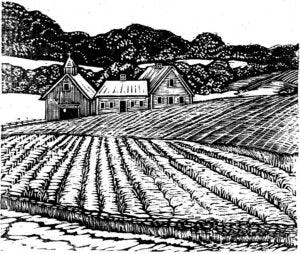
Golden sunlight stretches wide over the Iowa hayfields in early September. At the Yoder farm near Bloomfield, a girl waves a hearty hello.
This is Regina, age 15. Besides household chores, she and her older sister Annie milk their family’s cows and drive a team of horses in the fields.
The girls laugh merrily when they talk. “Some people think we are twins, especially when we dress the same,” says Annie with a laugh. Today they wear identical raspberry-colored dresses, white aprons, and royal blue scarves tied under their chins.
Both say they’d rather spend their day in the fields than inside the house. “I think it’s great fun to work out,” says Regina.
“I feel more free outside,” agrees Annie in her mild way. “Farmwork doesn’t have to be done so fine and neat as needlework.”
Their day starts at 6:00 a.m. when their father wakes up the eight children who still live at home. Before breakfast, the girls feed the cows while their father and 22-year-old brother, Dan, feed the horses. All four help with the milking, and then Dan goes off to work as a carpenter.
The 12 black-and-white spotted Holsteins in the pasture look identical to me, but the girls befriended Jody, Joline, Vera, Abby, Shirley, Tina, Sheila, Fannie, and Pam when they were calves and call each one by name. Honey Lou and Sunny Sue, two fawn-colored Jerseys munching hay in the corner, complete their herd.
“Some people’s cows do kick, but ours don’t,” says Regina. “If they start to kick, we give them a little slap and they learn they can’t do that.” Hobbles—clamps that gently draw the cow’s hind legs together just above the knee—keep the cows quiet during milking.
Sometimes the girls get stepped on, which is not too serious. “It hurts for about five minutes, and that’s all there is to it,” says Regina.
Inside the barn I meet two colts, Dawn and Beauty. Regina pats Beauty on the lips, who bares her teeth in a jack-o-lantern smile. “I like to tease her,” says Regina. “She bit me the other day, just to be playful. Boy, did that hurt.”
An immense black stallion stands in the stalls across from the colts. “He’s gentle,” Regina reassures me as she strokes his forehead between soft black eyes. “He helps us clean the barn in the winter by pulling the manure spreader while we pile it up.”
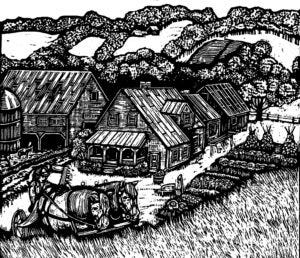
Suddenly three wide-eyed children appear. Robert, David, and Grace, aged 7, 10 and 12, drove home from their one-room school in an open pony cart. They show me how to hitch it up. Like a well-trained team, Robert and David pull the cart out of the shed while Grace slips the bridle on Midnight, their pony, and backs her in between the cart’s shafts. In one minute, thanks to teamwork, it’s ready to go.
Annie takes me for a ride. The wind blows in our faces. Annie likes riding in a cart better than a buggy, she says, “because it’s more open, more free.” We pass the grassy pasture where the Yoders’ cows and horses graze peacefully. With just a slight tug, Midnight turns around.
Back at the farm, I notice the family’s three black covered buggies stored in an open shed. Annie and Regina have driven their family’s covered buggies to town or to visit friends, “since we were big enough to reach up and put the bridle on the horse,” says Annie.
The family owns two Standard Bred geldings to pull the buggies and nine big-boned Percheron mares to plow the fields. Both girls love to mow the hay with a team of two mares. “If you like horses, you like to do things with them,” says Annie.
“Driving a workhorse is even more fun than driving a gelding because they’re more powerful,” says Regina. “When you drive the team, you just feel content. Except you have to watch to make sure you’re at the row you should be and the mower doesn’t get jammed up.”
Soon it’s 5:00 p.m. and time for Regina to round up the horses and cows from the pasture. Barefoot, she rides Midnight without a saddle, because “Dad says it’s more fun to ride bareback.”
The sun slips low on the horizon by the time the cows amble into the stalls. In a graceful motion, Annie swings the hobble chain under a cow named Sheila and fastens it just above the knees, drawing them together.
“Usually, you milk cows on the right side,” Annie says. But since Sheila is a two-bucket cow, the girls place their stools on opposite sides of Sheila, clutch shiny metal pails between their legs, and pull the cow’s teats with both hands in brisk rhythm. Frothy milk splashes into the buckets.
“Want to try?” Annie asks. I do, but when I squeeze the smooth round teat there’s barely a trickle. Annie laughs and makes milk squirt like a faucet.
They like to sing while milking. A plaintive hymn floats in the air, voices clear and sweet, perfectly on key.
There are no shadows
Without the sunshine.
There are no showers
When all is fair.
And roses blooming
In thorny places
With sweetest fragrance
Perfume the air.
Grace joins in, Robert listens. David stretches full-length on top of Midnight, stroking his mane and gazing dreamily out the barn window. It’s a moment of contentment, a moment I want to go on forever, suspended in time. But with milking over, Queenie the collie herds the spotted cows out of the barnyard. Regina shuts the gate, and the family is ready for dinner and bed.
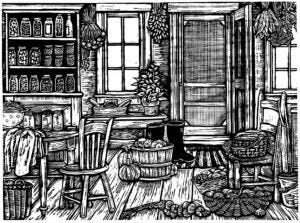
After my visit, Annie and Regina wrote these letters to me in perfect cursive script.
Dear Linda,
Greetings of Love!
Thank you so much for the candy! We received it in today’s mail. We are very pleased with your story. Everything is worded so nice.
We have a couple of words we want to change, but not much. On page 2 where the hobbles draw the cow’s hind legs together—just below the knee. It’s above, not below. Page 3 put the bridle on the horses, not halter.
That’s all we found that’s wrong.
Today we did the laundry and picked a 5-gallon bucket full of green beans, so we have to can those tomorrow. THANKS again for the candy!
Bye
Annie
And on the other side of the paper:
Dear Linda,
Greetings of Love!
First of all, I want to thank you for the candy. It was very good. And we are very pleased with the way you wrote the story. It was worded just perfectly. There were a few words wrong but nothing much, and I see Annie has corrected them. But she forgot something on the 2nd page in the 3rd paragraph. About the cows, you must have forgotten the 2 Jersey’s names, Honey Lou and Sunny Sue.
Thanks again for the candy.
Bye
Regina
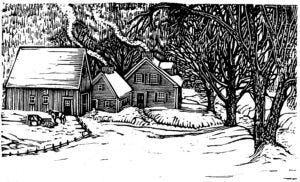
Reprinted with permission of the University of Iowa Press from Visits with the Amish: Impressions of the Plain Life by Linda Egenes. Copyright © 2009 University of Iowa Press.
Woodcuts by Mary Azarian. Used by permission.
Photo courtesy of Juliet Jarmosco.
Reprinted from The Blazing Star Journal, May, 2026.
Copyright © 2026 by Linda Egenes

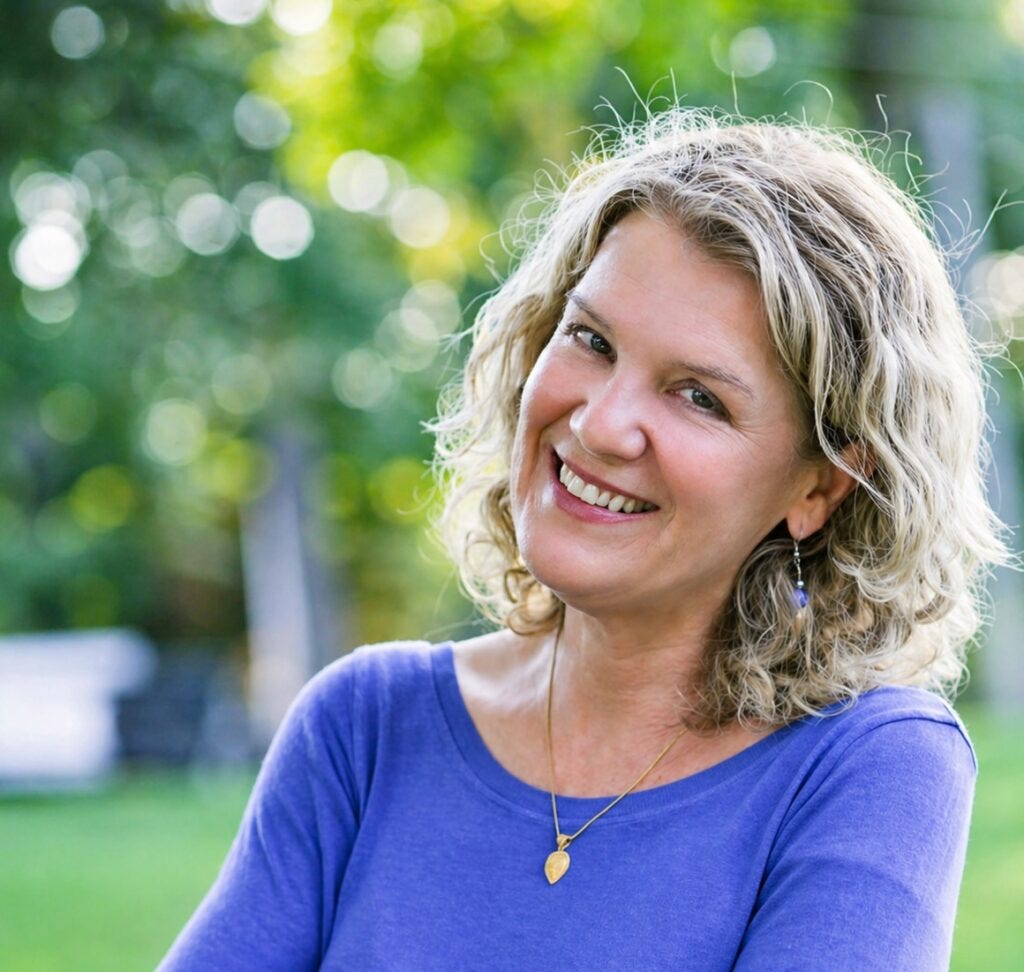
Curious about her Amish neighbors, Linda Egenes made friends in three Iowa Amish communities and wrote essays about her experiences in Visits with the Amish: Impressions of the Plain Life (University of Iowa Press, 2009). She is the author of five other nonfiction books and has recently completed a historical novel set in the Amish community of Kalona, Iowa, during WWII. She teaches fiction and creative nonfiction in the online MFA in Creative Writing at Maharishi International University in Fairfield, Iowa, where she lives with her husband, Dr. Thomas Egenes.
You can reach her at www.lindaegenes.com
What a wonderful post. It makes me homesick for what I've never known directly but almost feel as though I remember. I love the title and the two-bucket cow!
A lovely read. I especially like the notes the girls wrote to Linda. And what hard workers they all are.