A Ferhoodled (or Messy) Time
by Jane Yoder-Short


This essay excerpt is part of Jane Yoder-Short’s memoir, Mennonite Farm Girl Stirs the Pot, A collection of untidy attempts. The entire essay is called Seeing Beyond Fences first published in The Blazing Star Journal:
I headed to South Bend and began studying architecture, a way to combine art and math.
South Bend was a ferhoodled (Pennsylvania Dutch for messy) time. Life became a mix of Catholic and Mennonite. Like combining soda and vinegar, it caused some interesting effects.
I attended a Catholic University during the week while living near my Sunday hangout of Community Mennonite Church. Community Mennonite was a mission church in a section of the city haunted by poverty.
Take away the German/Russian heritage and Amish ancestors, what flavor Mennonites do you have? There, among the boarded-up houses and unsafe neighborhood, I found Minnie. Two of her sons were in jail. Her teenage daughter was pregnant. A favorite saying of hers was, “I just tell Dr. Jesus my troubles.” This sounded way too sentimental and pious for me. Still, her love was welcoming and her heart was warm. She lived just two blocks away from me and we shared the same date for our birthdays.
After church, she’d say, “Jane, stop by sometime.”
“Ok.”
I’d get too busy, but she kept inviting me. Our deep cultural differences didn’t seem to bother her.
One Saturday I headed to her house and carefully climbed the broken steps. Her young adult son came to the door and stared at me. The hate was visible. It didn’t matter who I was, I was white and at his door. It was a time when racial suspicion filled the air. I heard Minnie’s voice yell at him.
“You go on now.”
“Jane, come on in. Sit on the couch with me and tell me about your family.”
“Only one sister.”
“I bet your mom misses you.”
Mennonites don’t need to talk Dutch or have certain ethnic roots. Did Minnie and I see Mennonites as the same? Mennonites had become her neighbors and she accepted their love. She wasn’t concerned about their theology.

Later someone mistakenly told me, “You can tell a Christian by their well-kept yard and their nice porch” – I knew they were full of crap. It’s hard to spot the faithful when we’re looking at the wrong things. Minnie’s porch and house were in danger of becoming condemned by the city, but her heart was filled with love.
A young Black Mennonite preacher came to replace the white missionary. Good intentions took on disconcerting overtones. He was critical of the couple who had invested time, energy, and love into the church.
“But they had good intentions,” I told him.
“Good intentions are not enough. Meet me for coffee, and I’ll explain.”
It sounded more like a dare than an actual conversation invitation. We did meet. His anger spilled into the exchange.
“What do you do when good intentions are paternalistic and condescending? Why are so many songs European Mennonite?”
“But I thought the singing was a mix.” I tried to insert a little optimism into the conversation.
“Why are the neighborhood people only given token jobs at church?”
“Aren’t there ways we can work together?”
Here was someone excited about Anabaptist theology but impatient with Mennonites. He was correct in many of his observations. Like my childhood church, the issue seemed to be about power, about who makes decisions, who chooses the fences that hold us together.
Community Mennonite failed in many ways, but it wasn’t without merit. People crossed lines and began to understand each other in new and hopeful ways.

There was the neighborhood women’s group. We mostly did crafts and baked cookies while chatting. The group included neighbors from the Pentecostal church along with women from the Mennonite church. It was a clashing of The Quiet in the Land, as Mennonites think of themselves, with the loud praisers of the Lord.
“Jane, we got special meetings. Come along to church.”
“I’ll think about it.”
“No thinking. It’ll be fine. We’ll stop by for you. We’ll walk together. You need a little more soul.”
How did I let them talk me into going along? I was the only person of my race. I was the only person who didn’t know movement was part of worship. We laughed together at my awkwardness.
I saw things I wasn’t looking for and began to understand culture in ways that made me uncomfortable and hopeful.
While I was experiencing the disadvantaged neighborhood, I was also experiencing the advantages of wealthy Catholic students. I didn’t know much about Catholics except my childhood biases. They elevated Mary too high, played bingo for money in their church basements and wrongly held to a just-war theory. My learning curve was high.
I probably impolitely stared. Everyone had dirt on their foreheads.
I reached class and sat next to a friend.
“OK. Excuse my ignorance but why does everyone have dirt on their foreheads?”
“Mennonites don’t do Ash Wednesday?”
“Ash Wednesday?”

“It’s the beginning of Lent. The priest puts ashes on you to remind you that you are ashes. And we also fast or at least don’t eat meat and we confess our sins. There you have it.”
“Can I get ashes?”
“Only if the priest thinks you’re Catholic.”
I decided to forgo pretending I was Catholic, but throughout the day, I did try to be aware of my shortcomings.
There was an ROTC group on campus. They wore their uniforms and stuck out worse than I did in my habitual Amish denim jacket with its hooks and eyes.
One of the ROTC fellows was in a class with me. One day I went from discussing homework to asking why he joined ROTC.
“I’m curious. Can you explain how your faith fits with joining ROTC?”
“Ah, nothing to do with faith. It’s money. I’m not as rich as some of these privileged pimps.”
Having once met Jay, a real pimp, I didn’t think his fellow students were worthy of the label. I let the comment pass, while the image of towering Jay with his jewels and gun floated in my mind.
“Do you ever worry about killing someone?”
“Nope, I try not to think of it. I’ll be an officer and just tell others to kill. Then I’ll get out as soon as I can.”
“And it won’t change you, make you someone you don’t want to be?”
“I guess time will tell.”
“When is a war just?”
“What are you? Some kind of spy sent to interrogate my loyalty?” He laughs and leaves.
We kept discussing Mennonite pacifism and Catholic just war. It had nothing to do with our structural engineering homework.
“Hey, Jane. I got an invitation for you to be on a panel, and you can’t say no. ROTC is discussing just war theory and they want a pacifist on the panel. I suggested you.”
“But I’m not a theologian.”
“You do pretty good arguing with me.”
“That’s different. You aren’t a panel.”
“You can do it.”

There I was on a panel with four other people with varied ideas on when war is justified. We sat at a table in the front of the room. I looked out over the rather small audience. It was filled with too many ROTC uniforms.
I tried to make a case for how the just war theory should rule out wars, not justify them. Will war do less harm than the evil it is trying to prevent? Would Jesus ever justify war?
It was a trip into foreign territory.
Living in South Bend taught me much beyond my architectural classes. I thought I grew up poor, but I grew up rich and privileged, even though my hometown was confused about my family’s status. I had thought Catholics had it all wrong, but I saw passionate ones, even a couple of Irish Catholics whose call for justice echoed what I was looking for.
Living in South Bend taught me Mennonites can disagree and still find ways to show love.
Leaving South Bend behind, I headed into married life. My partner was a friend from college who had always kept in contact. After a few more years in Indiana, we headed to Michigan where he took a job at a university in Michigan’s Upper Peninsula, where Mennonites didn’t exist. There were some interesting Finnish Lutherans and a host of non-denominational evangelicals.
Finnish Lutherans looked similar to conservative Mennonites, but they had different fences. They smoked in public and ate rubbery Lutefisk and Yooper pasties. Pasties were a good find. They were vegetables, including potatoes and rutabaga, plus meat, wrapped in a small package of pie crust. A friend showed me how to make them.
Even though I made Finnish Lutheran friends, we were ethnically different enough we didn’t fit in with their church herd.
A neighbor invited us to the Christian Church. The sermons made me slightly uncomfortable, but no one is perfect. I decided to get more involved.
“I heard you need a Sunday school teacher. I’m willing to help.”
“Now your background is Mennonite?”

“Yes.”
“I’m not very familiar with them. Do they immerse when baptizing?”
“No, they are more of the pouring variety.”
“I’m sorry, if you want to teach, we require immersion.”
“Oh. I’ll give it some thought.”
This baptism fence sounded odd to me. Does the amount of water really matter?
Phil had baptized me, and although I had mixed feelings about my home congregation, I did respect Phil. He had been made fun of during WW1 because he refused to wear a uniform and carry a gun. Phil’s sprinkling baptism seemed good enough. I decided not to teach Sunday school. I soon became a dropout.
Just when total cynicism was about to set in, we found a small Quaker group. At first, their silent meeting was unsettling, but it became a refreshing change from sermons echoing a nationalistic, pious, patriarchal faith.
Quakers taught me to relax about fences and worry more about centering. Quakers pulled up the fences. They didn’t worry about who was a member or who was on the edge doing unholy actions. When John, an opinionated skeptic, started attending, no one seemed concerned even though at times he was rude. He seemed to enjoy pointing out the stupidity of people’s faith.
Curious, I brought it up to the clerk, the person appointed to close the meeting and oversee the monthly business meeting.
“Can anyone attend meetings? Do you ever ask someone to tone down their sharing?”
“It’s not our job to limit who can join Meeting.”
“What if they cause trouble or divisions or try to confuse people?’
“Is John making you nervous? We trust something bigger than ourselves to work in people’s lives and hearts. Sounds like you’re trying to keep John out.”
“Maybe I’m being too Mennonite and wanting clearer boundaries.”
She chuckled. “Mennonites may need fences, but Quakers don’t worry about it.”
“Do you ever worry about not knowing who you are?”
“I’m not sure fences help people understand their center.”
John soon tired of harassing attendees and dropped out. I kept pondering centering versus fences.
Some at the Quaker meeting were involved in the local active peace group. Among this milieu, I spotted people whom I considered part of my herd.
One more area to fly over. We headed back to Iowa. I had missed Mennonites, but I wasn’t ready for the rural Iowa variety. Maybe I had been with Quakers long enough not to worry about maintaining fences. Maybe I had been away from traditional Mennonite churches long enough to forget how ethnicity and politicking can flavor congregational life.
I found many Mennonites still liked fences. Their fences differ from the Amish, their related religious cousins. The Amish know exactly what women should wear, the style of your buggy, and who is in and who isn’t. Mennonite fences are looser when it comes to dress, vehicle choices, and the wild use of electricity and telephones. Still, some Mennonite fences are charged with emotional electricity. LGBTQ inclusion is a passionately disputed fence.
It was after a soccer game. I had recently written an article for a Mennonite publication on how loving neighbors comes without limiting fences, fences that label people as undeserving of love. After the game, the mother of one of the players on my son’s team came up to me. She had read more between the lines than I had clearly stated. She had made assumptions, as we all do.
“Jane, why take a chance? Why walk so close to the fence? It’s safer to stay away from what might be wrong. Fences keep us secure.”
“What if worrying about fences causes us to lose our way?”
“Some fences are clear.”
“Clear to who?”
“Clear from the Bible.”
It was an awkward conversation. It ended with her saying, “I will pray for you.”
Great. Prayer can’t hurt. I could tell she cared about me. I walked away feeling like I’d be happy to talk to her more. This isn’t always the case when people disagree.
Fence-moving projects must be carefully implemented. Sometimes change just seems to be pokich, which is Pennsylvania Dutch for slow.
Fences can offer safety, but they limit movement. Cattle need fences or they can wander onto a road and get hit by cars. They can end up lost and there is no one to care for and feed them. When are fences helpful? And when do fences become detrimental and limit our vision?
Spotting Mennonites takes you inside and outside different fences. Sometimes you find a herd that welcomes you. Sometimes you welcome the safety fences bring. Other times fences seem to get in the way of reckless love.
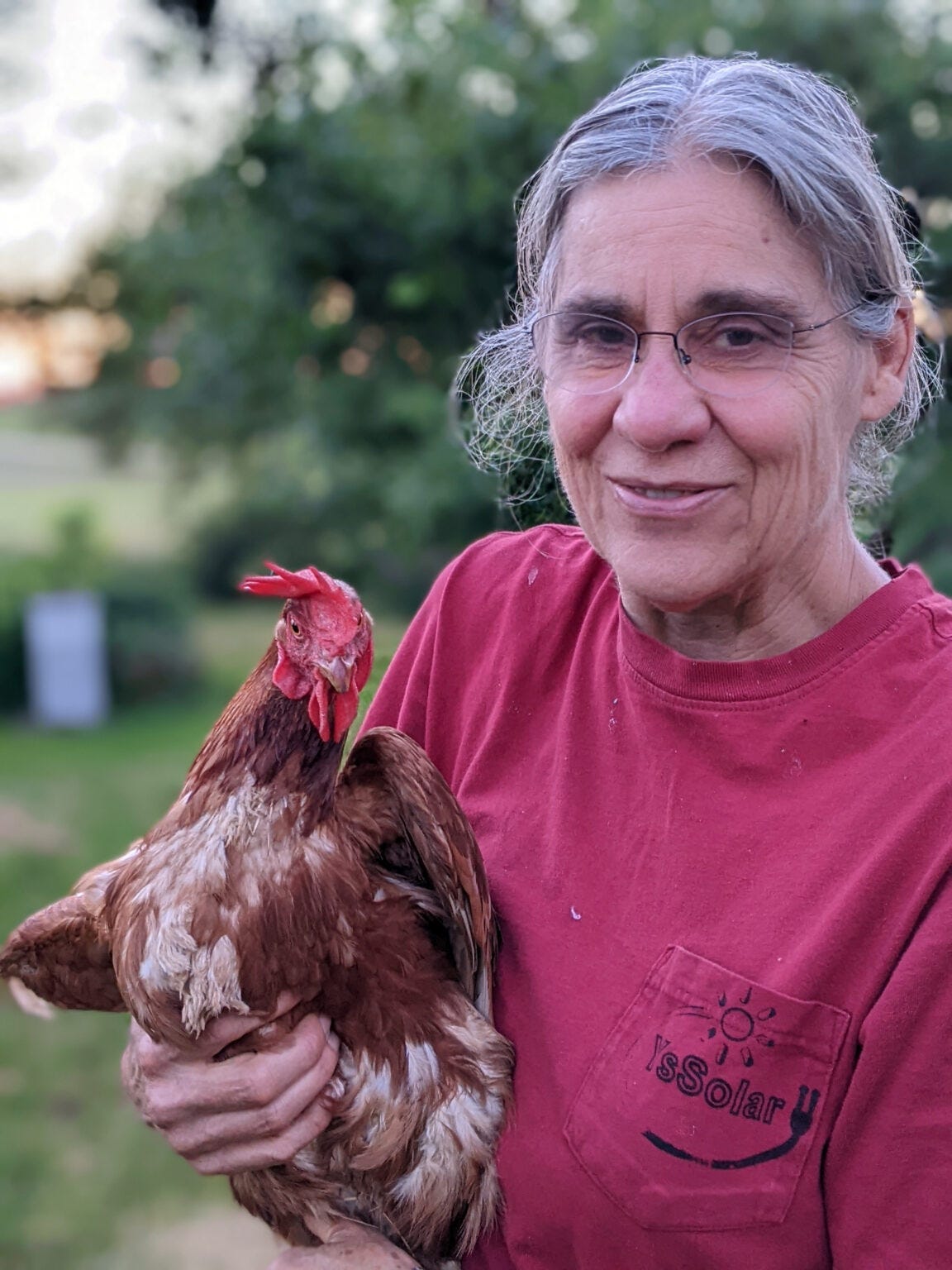
Jane Yoder-Short grew up on a small Ohio farm surrounded by a Mennonite community. She was lucky enough to have Amish relatives. She keeps a little dirt on her shoes.
Yoder-Short holds a bachelor’s degree in art and math from Goshen College (Indiana). She holds a professional bachelor’s in architecture from the University of Notre Dame, South Bend, and a master’s in theology and ethics from Anabaptist Mennonite Biblical Seminary, Elkhart.
Interested in the Iowa Writers Collaborative? Check out our new format in the Sunday Round-Up and the Wednesday Flipside:

Beautiful writing. I have a few Mennonite friends in Kalona. One is Floyd Miller, a man in his 40's. He is in charge of selling meats for the cooperative of Mennonite farmers. About eight of them toured our farm last summer. I also know Eldon Miller who started the dairy and egg cooperatives. And there is yet another Miller that I know quite well. He is Bob Miller who used to be a corn breeder for Syngenta. He got sick of them and came back to Kalona to start his own seed company called Miller Hybrids (naturally). He sells both organic and conventional corn varieties.